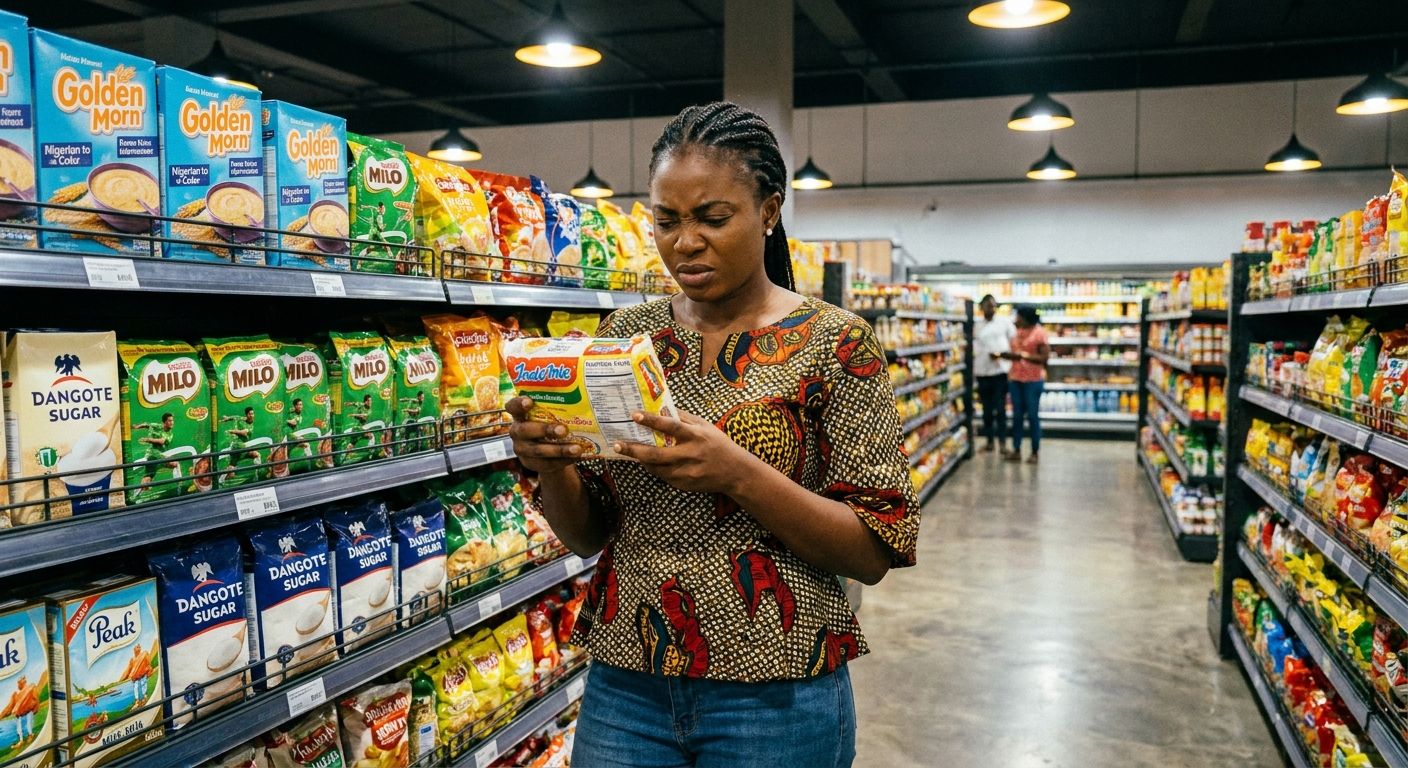
Getting your product onto Nigerian supermarket shelves is possible for a small producer, but there is a specific order to follow. Skip any step and you will get rejected before the buyer even looks at what you brought.
Most small food businesses make the same mistake: they go straight to Shoprite. Understandable, since it is the biggest name. But Shoprite is also the hardest chain to enter. The producers who get in arrive with full NAFDAC certification, clean shelf-ready packaging, a track record from smaller retailers, and a supply chain that can restock within days of running out. Those things take time to build. Walk in without them and you get a polite no.
The path exists, and it has a specific order.
Why most small producers get rejected at the door
Picture a Nigerian home producer making something genuinely good: packaged zobo, chin-chin, suya spice blend, palm kernel oil, crayfish. They visit a store, ask to speak to someone in management, leave samples. Nothing happens. They follow up. Same result. They assume the buyer does not want local products, or that there is a bribe somewhere they do not know about.
That is usually not what is happening. The producer is simply not ready in the ways a buyer checks before tasting anything.
A supermarket buyer looks at four things before a single product touches their lips: Is it registered with NAFDAC? Is the label compliant? Can this supplier deliver consistent volume on a recurring order? What is the margin? Most small producers walk in without having answered any of those. The buyer moves to the next name on their list.
The sequence that actually works
Step 1: Register your business and open a proper bank account
Before approaching any retailer, formalise the business. You need a CAC-registered business name and a corporate bank account. Supermarkets pay by bank transfer on 30 to 60 day cycles and will not add you to their vendor list without proper documentation. Banks also will not open a corporate account without your CAC registration.
CAC business name registration costs ₦11,000 and can be done online at cac.gov.ng in under 24 hours. A private limited company costs more and takes longer, but for most small producers starting out, a business name registration is enough.
Step 2: Get your NAFDAC number before you approach anyone
NAFDAC registration is not optional for packaged food or beverage products. Every Nigerian supermarket is inspected by NAFDAC and carries legal liability for what is on its shelves. No store will stock an unregistered product.
NAFDAC has a dedicated registration track for MSMEs. You do not need a lawyer or consultant to navigate it. The fee is lower than the standard track and the process is now digital. Go to nafdac.gov.ng and look for the MSME Desk or NAFDAC Portal. Allow approximately 90 working days from submission of a complete application.
Start this before you approach anyone. Going into a buyer meeting without your NAFDAC number is like showing up to a job interview without your CV.
Step 3: Get your packaging to shelf standard
Your packaging has two jobs: pass regulatory compliance, and look like it belongs on a shelf.
On compliance, a Nigerian product label must carry your NAFDAC registration number, the product name, a full ingredient list in descending order by weight, allergens declared separately, net weight or volume, production date, expiry date, batch number, and the name and address of the manufacturer.
Most home-packaged Nigerian products are missing at least three of those. A buyer who spots a non-compliant label will not ask you to fix it. They will call the next supplier.
Beyond compliance, think about whether your product looks like it belongs next to the other items on that shelf. You do not need to match the budget of bigger producers. You need to look intentional: consistent font, clear product name readable from two metres, a label that does not peel, packaging that holds its shape. Go to the store and find the category your product would sit in. Pick up a few similar products. Look at yours honestly. If it does not belong in that row, fix it before you book any meeting.
Step 4: Start with accessible chains, not Shoprite
Most Nigerian producers never hear this: Shoprite is where you are trying to get to, not where you start.
The Shoprite AWP Network Vendor programme received over 2,500 applications and certified 61 suppliers. Those 61 did not walk in cold. They had documentation, a track record, and proven supply capacity.
Start with chains that are actively looking for local products. Justrite Superstore, Hubmart, Everyday Supermarket, Park n' Shop, and regional chains in your city are all increasing their local sourcing. Justrite now gets 60 to 70 percent of its packaged food category from local producers. Shorter onboarding, less bureaucracy, and buyers who are genuinely open to new local products.
Get listed at two or three of these first. Build 6 to 12 months of sales history. That record is what you walk into a Shoprite or Spar meeting with later. "We have been supplying Justrite Lagos for ten months. Our average monthly reorder is 400 units. Here is our reorder history." That conversation goes somewhere. Walking in without that history does not.
Step 5: Approach the buyer correctly
When you are ready to pitch, do not ask to speak to the store manager. Managers handle operations. You want the category buyer, the person responsible for the specific product category yours would sit in, whether that is dry goods, beverages, personal care, or something else. If they are not available, leave your materials and confirm when to follow up.
Come to the meeting with three things.
A one-page company profile with your business name, CAC and NAFDAC numbers, a brief description of your product and production capacity, and your contact details. One page is enough.
Physical samples, at least three units, labelled clearly.
A pricing sheet that already accounts for their margin. Supermarkets expect 30 to 40 percent. If your retail price is ₦1,500, the store keeps between ₦450 and ₦600 on each unit. Show them the suggested retail price, the trade price (what you charge them), and the resulting margin. If you have not worked this out before you arrive, the meeting will be short.
Understanding the commercial terms before you sign anything
A verbal yes from a buyer is not a supply contract. Before you start delivering, you will sign a vendor agreement. Read it carefully, or have someone who understands contracts read it for you.
Three things in particular matter for small producers.
Payment cycle. Most Nigerian supermarkets pay suppliers 30 to 60 days after delivery, sometimes longer. You deliver ₦500,000 worth of goods today and receive payment two months from now. If your production costs are not already covered, that cycle will put you in a cash flow problem fast. Plan for it before you sign.
Consignment terms. Some chains, especially smaller ones, will not purchase your product outright. They put it on their shelves and pay you only after it sells. This lowers their risk and raises yours. It can work if you have enough inventory and can afford to wait, but it goes wrong quickly if the product moves slowly. Understand exactly what you are agreeing to.
Listing fees. Some supermarkets charge a one-time fee to add a new product to their system. More common with larger chains, not universal, but it does happen. Factor it into your launch budget.
The mistake that costs you the slot after you get in
Getting listed is the start of the evaluation, not the end.
When a Nigerian supermarket places a first order, they are testing whether you can actually supply consistently, not just whether the product is good. If you run out of stock and cannot refill within three to five days of a stockout, your slot goes to someone who can. This happens constantly. Producers celebrate the listing, get overwhelmed by the volume, and lose the contract within months.
Before accepting any retail listing, be honest about your production capacity. How many units can you make in a week? What is your minimum batch? If demand triples, can you scale? Resolve those questions before you agree to supply.
OmoAlata, the Lagos company that packages Nigerian soups and spices, now supplies Spar and Dia. They got there by formalising their production process first, not by pitching buyers. The backend work came before the sales conversation, and that order is what made the difference.
Frequently asked questions
Do I need NAFDAC registration before approaching any supermarket?
Yes, for any packaged food or beverage. Nigerian supermarkets are inspected by NAFDAC and carry legal liability for unregistered products on their shelves. No store will stock one. Start the MSME registration process at nafdac.gov.ng before approaching any retailer. If you are currently selling unregistered products at markets or on WhatsApp, you can continue while your application is in progress, but do not approach supermarkets until the number is confirmed.
Should I use a distributor or go directly to supermarkets?
Going direct gives you better margins but means handling delivery, invoicing, and the vendor relationship yourself. A distributor takes 20 to 25 percent of your revenue and typically pays 30 to 60 days after delivery, which creates cash flow problems for small producers. Start direct with one or two small chains so you understand how the full process works. Consider a distributor when volume makes logistics genuinely hard to manage alone, or when the distributor can open doors to chains you cannot reach yourself.
What if a supermarket wants to stock my product on consignment?
Consignment means they pay you only after the product sells. Many smaller Nigerian chains offer this to new suppliers as a lower-risk trial. It reduces the chance of rejection but shifts all the financial risk to you. Only accept it if your production costs are already covered, you can afford to wait 30 to 60 days for payment, and you are confident the product will move. If it sits on shelves for three months without selling, you will eventually get your goods back, but you will have carried the cost that whole time.
How long does it realistically take from home production to a supermarket listing?
Six months minimum if you start NAFDAC immediately and your packaging is already in order. More realistically, 12 months from the decision to formalise to your first retail order at a smaller chain. Producers who reach Shoprite or Spar typically have 18 to 24 months of documentation and supply history behind them. The ones who move fastest are those who started at a smaller chain, built a track record, and used that to get into bigger ones.
What happens if a supermarket rejects me?
Ask why. Buyers are not always forthcoming, but if you ask specifically about documentation, packaging, or pricing, you will usually get something useful. Most first-meeting rejections are not permanent. They are a list of things to fix. Fix them, then come back.